23 Markets | Battery-Buffered EV Charging & BESS | XEYAR
XEYAR battery-buffered EV charging and BESS deployed across 23 markets
23 Markets. One Certified Architecture.

Markets We Power.

XEYAR's patented battery-buffered EV charging and Battery Energy Storage Systems (BESS) serve 23 distinct market segments across two categories — EV Charging and BESS — with 3,500+ units deployed across 39 countries. Headquartered in Delaware, United States with offices in Ontario, Canada and Dubai, UAE, XEYAR serves the USA, Canada, GCC, MENA, and India. Two patented technology options — supercapacitor or sodium-ion — on one certified, lithium-free architecture. From residential solar homes to utility-scale grid storage, urban forecourts to Arctic microgrids, hospital campuses to Indigenous communities.

23
Market Segments
39
Countries Deployed
3,500+
Units Installed
2
Technology Options
Two Categories. Twenty-Three Markets.

Every Deployment Environment. Every Scale.

Whether you're deploying ultra-fast battery-buffered EV charging at a forecourt without grid capacity, co-locating patented supercapacitor or sodium-ion BESS with a utility-scale solar farm, replacing legacy UPS batteries in a data center, enabling EV adoption at a hospital campus or school district, or supporting year-round microgrid operation in the Arctic — XEYAR delivers a certified, lithium-free battery-buffered solution engineered for the demands of your specific market.

EV Charging Markets — 17 Segments

Battery-Buffered Fast Charging. Any Site. Any Grid.

All XEYAR patented battery-buffered DC fast chargers operate on standard 480V grid service with no utility upgrade required — making them deployable across virtually every commercial, retail, fleet, institutional, and multifamily EV charging market. Available in Supercapacitor (SuperCap EV) and Sodium-Ion (Na-ion EV) buffer variants to match each market's power, footprint, and budget requirements. The patented clustered architecture supports any mix of Level 2 and DC fast charging ports on a single system. View all battery-buffered EV charger models →

Gas station forecourt — context for XEYAR battery-buffered EV fast charging deployment at fuel retail sites
Gas Stations & Forecourts

Turn the EV Transition Into New Revenue

Fuel retailers face a structural transition — XEYAR turns that threat into a high-margin revenue opportunity at the existing forecourt footprint.

Why XEYAR for Gas Stations

  • Ultra-fast charging in 10–15 minutes — matches the duration of a typical fuel stop
  • No grid infrastructure upgrade required — deploys on existing 480V forecourt service
  • Up to 360 kW peak output — charges two EVs simultaneously at full speed
  • New high-margin revenue stream — approximately $262,800 annual revenue per 240 kW unit at 20% utilization
  • Increases per-visit basket size — EV drivers dwell longer, spending more in-store
  • Positions the forecourt as an EV charging destination alongside fuel, coffee, and convenience retail
  • Peak shaving reduces electricity costs by up to 25% via AI energy management
  • 20-year warranty — minimal long-term maintenance vs. conventional forecourt equipment
$262,800
Annual Revenue
2.9 yrs
Payback Period
10–15 min
Charge Time
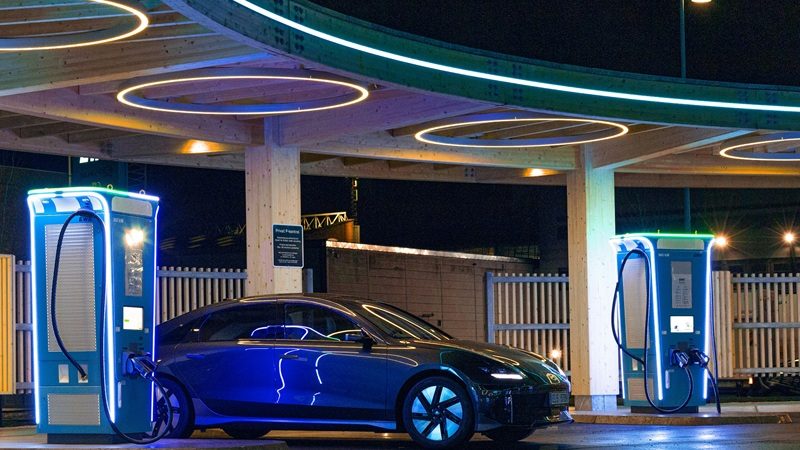
EV fast charging station at night — context for XEYAR CPO network deployments
Charge Point Operators (CPOs)

Remove the #1 Bottleneck: Grid Capacity

XEYAR eliminates the grid-capacity constraint that stalls CPO network rollouts — compressing deployment timelines from years to weeks.

Why XEYAR for CPOs

  • Deploy on standard 480V service at any site — no utility application, transformer upgrade, or 12–24 month grid wait
  • Dramatically accelerates site rollout timelines — compress deployment from years to weeks
  • Dual-port design maximizes revenue per site — two simultaneous full-speed charging sessions
  • AI energy management platform — real-time optimization of charging costs, buffer state, and grid demand
  • Remote CMS monitoring — cloud-based diagnostics, uptime tracking, predictive maintenance
  • 4× daily cycling capability — maximize throughput and revenue hours vs. competing buffer solutions
  • 20-year warranty — reduces long-term OPEX and de-risks network infrastructure investment
  • Available in SuperCap and Na-ion variants — match technology to site profile and budget model
Modern commercial shopping street — context for XEYAR commercial hub EV charging
Commercial Hubs & Retail Centers

Traffic Driver. Dwell-Time Extender. Differentiator.

EV charging has become a traffic driver, a dwell-time extender, and a competitive differentiator for commercial real estate owners and property managers.

Why XEYAR for Commercial Properties

  • Deploys within existing building electrical infrastructure — no service-panel upgrades, no utility applications
  • Ultra-fast charging keeps shoppers on-site longer — EV drivers at amenity-rich locations spend more per visit
  • Generates direct charging revenue for property owners and management companies
  • Drives EV-owning customer traffic — charging availability is increasingly a destination decision factor
  • Enhances ESG credentials and green building certification scores (LEED, BOMA BEST)
  • Multiple units deployable on one service connection — modular expansion without additional utility capacity
  • Operates at -40°C to +65°C — outdoor installation in all North American climates
  • Compact footprint — fits within standard parking bay dimensions
Aerial view of highway interchange — context for XEYAR highway corridor EV charging
Highways & Travel Corridors

Maximum Power Where Grid Access Is Limited

Highway charging requires maximum power at locations where grid access is most limited — XEYAR is uniquely engineered for this challenge.

Why XEYAR for Highway Corridors

  • Operates on limited grid service — no costly transmission line extensions at remote rest stops
  • Up to 360 kW output — fastest available charging for highway range-anxiety relief
  • Solar & wind integration ready — operate with near-zero grid dependency using on-site renewable generation
  • Off-grid capable deployments — fully self-sufficient EV charging with battery buffer + solar microgrid
  • Operates at -40°C to +65°C — suitable for northern corridors including Trans-Canada and Alaska Highway
  • Minimal maintenance — critical for remote locations with limited service access
  • 20-year warranty + 30–45 year SuperCap design life — long-term reliability without frequent replacement
  • Supports government EV corridor mandates — NEVI-aligned and ZEVIP-compatible deployment model
Modern multifamily high-rise buildings — context for XEYAR multifamily EV charging
Apartments & Multifamily

Solving the Multifamily Charging Barrier

Multifamily EV charging is one of the fastest-growing and most underserved markets — XEYAR solves the core technical barrier that prevents deployment.

Why XEYAR for Multifamily Properties

  • Apartment & workplace charging projected at ~17% of global charge points by 2040 — approximately 12 million units (PwC Analysis)
  • No building electrical service upgrade required — eliminates the primary barrier to multifamily EV charging
  • Multiple high-power chargers on one connection — serve dozens of resident EVs without overloading building service
  • New amenity revenue stream for property owners and strata corporations
  • Significant competitive differentiator — EV charging is increasingly a lease decision factor
  • Increases property value and rental premium in EV-dense markets (Toronto, Vancouver, California, NY)
  • Available in SuperCap and Na-ion variants — select based on parking structure size and power requirements
  • AI-managed overnight trickle charging minimizes electricity costs for property owners
Commercial delivery van fleet depot — context for XEYAR fleet electrification charging
Fleet Charging

Maximum Vehicle Uptime. Minimum Demand Charges.

Commercial EV fleets require maximum vehicle uptime — XEYAR delivers fast turnaround without the demand-charge exposure of direct-grid fleet chargers.

Why XEYAR for Fleet Operators

  • Dramatically reduces demand charges by smoothing peak load through battery buffer architecture
  • Deploy multi-vehicle charging on existing electrical service — no substation upgrade for depot electrification
  • Up to 360 kW per unit — fastest possible vehicle turnaround for delivery vans, taxis, and transit buses
  • AI fleet scheduling integration — optimizes charging windows around vehicle dispatch and return cycles
  • Supports simultaneous multi-vehicle charging via dual-port design and scalable multi-unit deployments
  • Na-ion EV offers higher energy density per footprint — suited to space-constrained fleet depots
  • 25% electricity cost reduction via peak shaving vs. direct-grid fleet chargers
  • CNAS non-hazardous transport certification (Na-ion) — simplifies multi-site logistics for national fleet operators
Automotive dealership showroom — context for XEYAR dealership EV charging
Car Dealerships

Ultra-Fast Test-Drive & Service Charging

EV dealerships need ultra-fast charging capability that doesn't compromise their facility's electrical systems — on the forecourt, in the service bay, or on the showroom floor.

Why XEYAR for Dealerships

  • Ultra-fast test-drive charging in under 15 minutes — full sales demonstration capability without pre-charging delays
  • No facility electrical upgrade required — installs within existing dealership service infrastructure
  • Charges two customer vehicles simultaneously — dual-port CCS & CHAdeMO supports all EV brands on the lot
  • Enhances the EV ownership experience for prospective buyers — demonstrates modern fast-charging capability
  • Service bay charging capability — rapidly charges vehicles for pre-delivery inspection and service readiness
  • Showroom-floor installation option — compact footprint allows indoor lobby or forecourt placement
  • OEM-agnostic compatibility — future-proofs the dealership for any EV brand franchise additions
  • 20-year warranty — long-term reliability aligned with typical dealership facility planning horizons
Remote desert highway — context for XEYAR off-grid EV charging deployments
Remote & Off-Grid Locations

Charging Where the Grid Cannot Reach

XEYAR unlocks EV charging at locations conventional chargers simply cannot reach — national parks, island communities, remote lodges, mining camps.

Why XEYAR for Remote Sites

  • Fully off-grid capable — battery buffer + solar/wind generation creates a self-sufficient EV charging microgrid
  • No grid connection required — enables EV charging at national parks, remote lodges, mining sites, and island communities
  • Operates from -40°C to +65°C — reliable year-round in Arctic, desert, and tropical environments
  • Zero maintenance supercapacitor buffer (SuperCap EV) — critical for sites with limited service infrastructure access
  • Solar PV & wind turbine integration — renewable-powered EV charging with zero ongoing fuel cost
  • Supports EV adoption in rural and remote communities — addresses charging infrastructure gap outside urban centers
  • CNAS non-hazardous transport certification (Na-ion EV) — simplified remote-site delivery via air, sea, or road
  • Modular containerized deployment — rapid installation without civil construction at off-grid sites
Hotel valet parking with EV charger — XEYAR guest-amenity DC fast charging for hospitality
Hotels & Hospitality

Guest-Amenity Charging That Drives Bookings

EV-owning travelers prioritize hotels with on-site fast charging — XEYAR delivers Tesla-destination-equivalent charging without requiring a hotel electrical upgrade.

Why XEYAR for Hotels

  • Documented booking conversion lift — EV-owning guests prioritize hotels with fast charging for 1-2 night stays
  • Deploys on existing hotel electrical service — no transformer upgrade, no utility study, no curtailment of HVAC or restaurant operations
  • Ultra-fast DC (60-180 kW) fully recharges guest EVs during dinner service or check-in
  • Tesla Universal Connector + CCS1 + NACS — serves all major EV brands (Tesla, Ford, GM, Hyundai, Kia, Rivian, Lucid)
  • Hospitality chain amenity standardization — Marriott, Hilton, IHG, Hyatt, Accor deployable to one electrical spec
  • Direct revenue via guest pricing or bundled Park+Charge packages
  • Integrates with hotel PMS (Opera, Mews, RMS) for billing and loyalty points
  • ESG marketing story for LEED, Green Key, Green Globes certification
Government fleet depot EV charging — XEYAR NEVI and ZEVIP compliant public sector deployments
Government & Public Sector

NEVI, ZEVIP, and Federal Fleet Mandates

Every XEYAR EV charger is engineered for NEVI, ZEVIP, and federal/provincial/state/municipal procurement — Buy America, Section 30C, and FEOC-compliant.

Why XEYAR for Government

  • NEVI-compliant — 150 kW minimum per port, 4 ports per site, CCS1, 97% uptime, Buy America, OCPP 2.0.1, ISO 15118 Plug and Charge
  • ZEVIP-eligible — Natural Resources Canada Zero Emission Vehicle Infrastructure Program funding recipient equipment
  • Buy America Act & BABA compliant — manufacturing and component sourcing eligible for federal infrastructure funding
  • Section 30C federal tax credit — 30% up to $100,000 per charger under IRA 2022 Alternative Fuel Vehicle Refueling Property Credit
  • FEOC (Foreign Entity of Concern) exclusion compliant — no restricted-country components or IP
  • Federal fleet electrification — GSA Schedule 23 V eligible for direct agency procurement
  • Cooperative purchasing — Sourcewell, OMNIA Partners, BuyBoard, TIPS, HGAC
  • State, provincial, municipal, and tribal procurement pathways ready
Electric school bus depot charging — XEYAR EPA Clean School Bus Program compliant charging
Education — K-12 & University

Electric School Buses and Campus Fleet Electrification

K-12 districts and universities are rapidly electrifying bus fleets on constrained electrical service. XEYAR removes that barrier at zero capital cost premium over direct-grid.

Why XEYAR for Education

  • EPA Clean School Bus Program eligible — $5 billion federal funding for electric school buses and charging infrastructure (2022-2027)
  • School bus depot electrification without grid upgrade — deploy 50+ ports on existing K-12 depot electrical service
  • Scheduled charging matches school-day bus dispatch — trickle overnight, rapid top-up between routes
  • V2G (Vehicle-to-Grid) capable — buses operate as grid storage during off-hours, generating revenue
  • University campus fleet — service, grounds keeping, transit shuttles, campus police, maintenance
  • Faculty and student residence hall charging without building service upgrade
  • Grant-funded rollout timing match — 4-6 week deploy matches EPA award-to-operational timeline
  • Sustainability Office ESG — Princeton Review Green Colleges, STARS, THE Impact Rankings
Hospital campus EV charging — XEYAR pairs with DRACO UPS for critical healthcare infrastructure
Healthcare & Hospitals

EV Charging That Pairs With Critical Power Infrastructure

Hospital campuses need EV charging for patients, staff, and fleets — without compromising the uncompromised critical power infrastructure healthcare demands. XEYAR DRACO UPS + EV chargers serve both from one platform.

Why XEYAR for Healthcare

  • EV charging without compromising critical power — battery buffer isolates EV load from OR/ICU/ED electrical systems
  • Pairs with XEYAR DRACO UPS — unified supercapacitor infrastructure for both patient charging and hospital UPS replacement
  • Staff and visitor parking charging — 24/7 availability matches hospital shift turnover (7a/3p/11p)
  • Ambulance and medical transport EV charging — rapid turnaround between emergency calls
  • Hospital fleet electrification — shuttles, inter-campus transport, food service, mobile diagnostics
  • Joint Commission (TJC) electrical standards compliant — NFPA 110 Type 10, Class X emergency power
  • GRESB Healthcare ESG and CDP Climate disclosures ready
  • Healthcare GPO purchasing — Premier, Vizient, HealthTrust, MedAssets eligible
More Segments. Same Architecture.

Five Additional EV Charging Markets.

Workplace campuses, parking operators, airports, QSR chains, and Indigenous communities — each benefits from the same no-grid-upgrade deployment model. The buyer profile changes and the funding source changes, but the underlying barrier is always grid capacity. XEYAR solves it the same way.

Workplace & Corporate

Large-scale employee EV charging deployable on existing building service — no electrical panel upgrade needed. Section 30C (30% up to $100K per charger under IRA 2022) eligible. LEED v4.1 EA credit. Integrates with corporate RE100, Climate Pledge, and SBTi net-zero commitments.

Corporate
RecommendedSuperCap EV 60-120 kW

Parking Operators & CRE

Impark, LAZ, SP+, Ace, Precise — monetize existing downtown parking real estate with premium-tier DC fast charging. Battery buffer peak-shaves urban TOU demand charges. Integrates with ParkMobile, PayByPhone, FlashParking. GRESB and REIT ESG disclosures.

CRE
RecommendedNa-ion EV 120-180 kW dual-port

Airports & Aviation

Three distinct profiles from one platform: long-term traveler parking (L2/DC trickle), rental car fleet depots (Hertz, Enterprise, Avis), and electric ground service equipment (eGSE — tractors, belt loaders, tugs). FAA VALE and AIP grant eligible. Buy America compliant.

Aviation
RecommendedSuperCap EV 240-360 kW + Na-ion for GSE

Restaurants & QSR

McDonald's, Starbucks, Chick-fil-A, Tim Hortons — 10-15 minute charging interval matches drive-thru plus dine dwell time exactly. Franchise-rollout deployment model. Loyalty app integration. Proof points: Starbucks Odyssey and Mercedes-Benz HPC at 150+ pilot locations.

QSR
RecommendedSuperCap EV 180-240 kW dual-port

Indigenous Communities

ISC (Indigenous Services Canada) funding eligibility including CERRC and CCBF. Non-hazardous transport certification (Na-ion EV) simplifies air/sea/ice-road freight to fly-in Nunavut and NWT communities. Operates -40°C in Iqaluit, Yellowknife, Inuvik. Aligned with UNDRIP and TRC Call to Action 92.

Canada
RecommendedNa-ion EV + solar PV off-grid package
🔋 BESS Markets — 6 Segments

Battery Energy Storage. Residential to Grid-Scale.

XEYAR patented Battery Energy Storage System (BESS) products span from residential home battery storage to utility-scale grid energy storage — in both Supercapacitor and Sodium-Ion variants. All XEYAR BESS systems are lithium-free, cobalt-free, and designed for the lowest levelized cost of storage (LCOS) in their respective application tiers. Deployed across the USA, Canada, GCC, MENA, and expanding into India — 3,500+ units in 39 countries. View all BESS product lines →

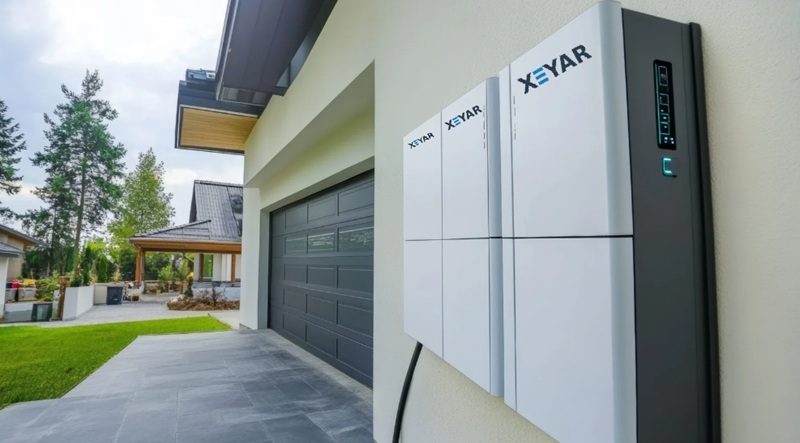
Residential home with XEYAR PHOENIX battery storage installation
Residential Solar Homeowners

Safest, Longest-Lasting Home Battery

XEYAR PHOENIX Series gives residential solar owners the safest, longest-lasting, and most cost-effective home battery storage available — with zero thermal runaway risk for indoor installation.

Why XEYAR for Residential

  • Zero thermal runaway risk — no lithium chemistry, safe for indoor installation without fire code restrictions
  • No special fire separation zones required — installs in garages, basements, and utility rooms like any home appliance
  • LCOS of approximately 7.2¢/kWh — approximately 67% lower than LFP home batteries over 20 years
  • 20-year product & performance warranty — minimum 60% capacity retention guaranteed
  • 50,000+ cycle life (SuperCap PHOENIX) — outlasts LFP home batteries by 5–8×
  • 100% depth of discharge — use every kWh, unlike LFP systems limited to 80%
  • Operates from -40°C to +65°C — no heating pad required in Canadian or northern US climates
  • IoT monitoring via CMS — real-time home energy dashboard and performance alerts
  • Available in SuperCap (13–15 kWh) and Na-ion (6.9 kWh) variants — right-size to household load and solar array
  • 90%+ recyclable — lowest end-of-life environmental impact of any home battery system
7.2¢/kWh
LCOS (67% < LFP)
50,000+
Cycles SuperCap
20 Years
Warranty
Offshore wind turbine farm — context for XEYAR renewable developer BESS co-location
Solar & Wind Developers

Capture Generation. Eliminate Curtailment.

XEYAR DRAGONFLY Series is purpose-built for renewable energy co-location — capturing generation, eliminating curtailment, and enabling dispatchable clean power against PPA and grid offtake obligations.

Why XEYAR for Renewable Developers

  • Up to 12C charge rate (Na-ion DRAGONFLY) — absorbs rapid solar/wind generation spikes without curtailment
  • 200% daily cycling capability (SuperCap DRAGONFLY) — multiple full cycles per day for maximum energy arbitrage value
  • Eliminates renewable curtailment — capture and store excess generation that would otherwise be wasted
  • Enables dispatchable renewable energy — deliver firm power on demand, meeting PPA and grid offtake obligations
  • Peak pricing optimization — charge during low-value periods, dispatch during high-value peak windows
  • Lithium-free storage option — supports ESG commitments of renewable developers and institutional investors
  • 50,000+ cycle life (SuperCap) — outlasts project finance terms without mid-life battery replacement
  • Non-hazardous transport (Na-ion) — simplified international and remote project logistics
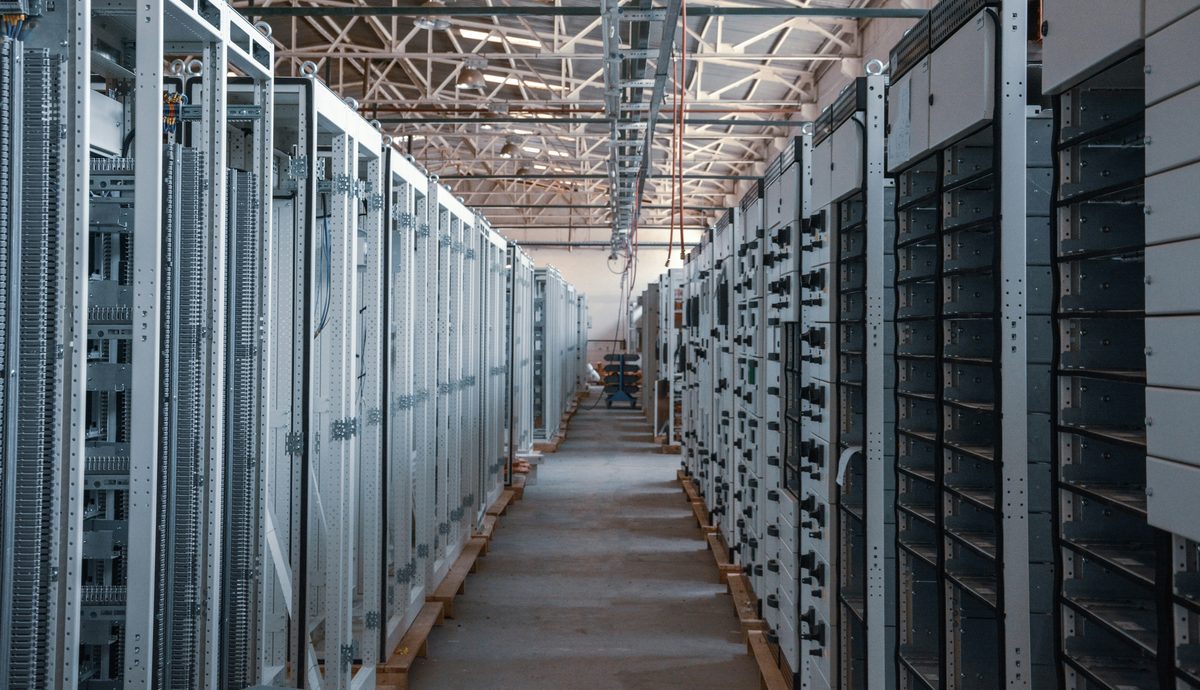
Modern data center server aisle — context for XEYAR DRACO data center UPS deployment
Data Centers & Critical Infrastructure

Replace Legacy UPS. Eliminate the Failure Point.

XEYAR DRACO Series replaces legacy UPS batteries with a safer, maintenance-free, longer-lasting alternative — eliminating the most common failure point in critical infrastructure power systems.

Why XEYAR for Data Centers

  • Millisecond response time — sub-cycle switchover ensures uninterrupted operation during grid disturbances
  • 5C discharge rate (SuperCap DRACO) — instantaneous full-power delivery on grid failure
  • Zero thermal runaway risk — eliminates the primary fire hazard of Li-ion and lead-acid UPS systems
  • No fire suppression infrastructure upgrade required — reduces construction and retrofit costs
  • Hot-swap modular architecture — replace individual modules without operational downtime
  • 30–45 year design life (SuperCap) — eliminates the 3–5 year UPS battery replacement cycle
  • Virtually zero maintenance — self-monitoring CMS reduces preventative-maintenance burden
  • Na-ion DRACO: 196 kWh in IP-rated outdoor cabinet — suitable for edge data center and co-location deployment
  • CAN / RS485 / Ethernet integration — native compatibility with DCIM, SCADA, and BMS platforms
  • Significantly lower TCO vs. lead-acid or Li-ion UPS — driven by cycle life, maintenance, and replacement cost elimination
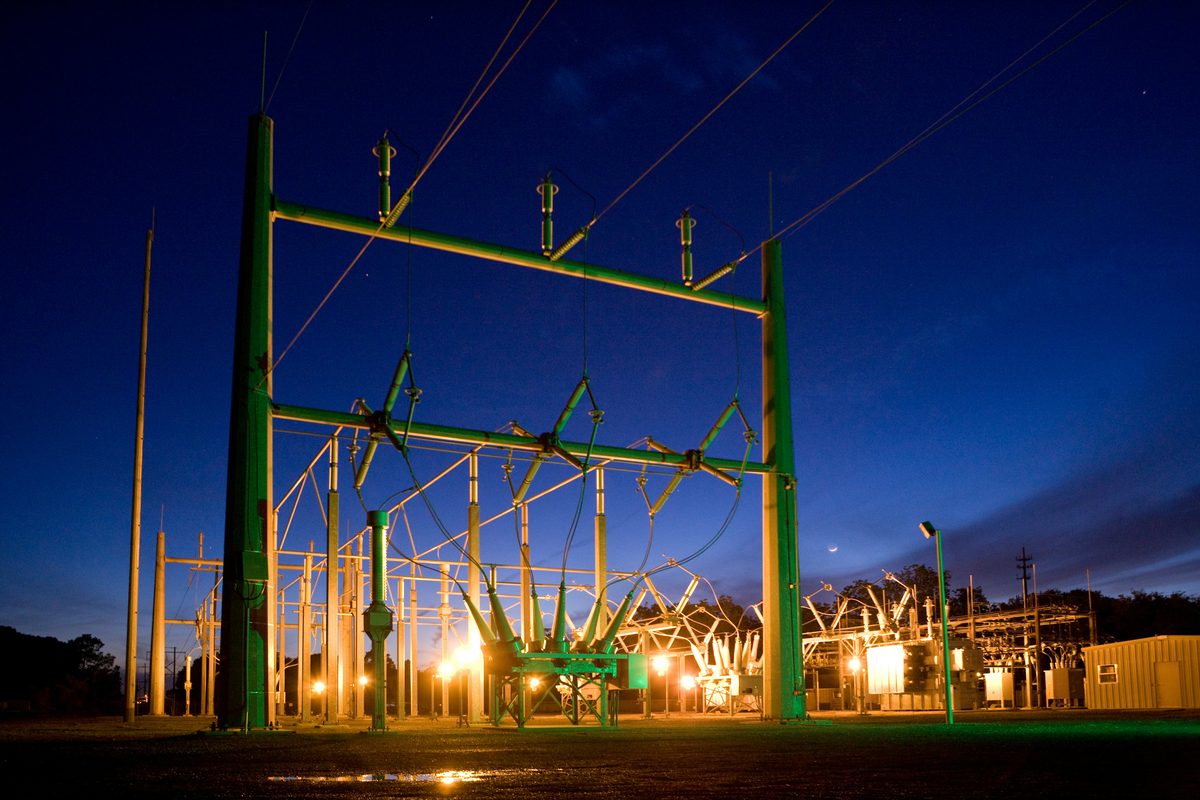
Electrical substation at dusk — context for XEYAR LEVIATHAN grid-scale energy storage
Grid Operators & Utilities

Utility-Scale Storage. Millisecond Response.

XEYAR LEVIATHAN Series delivers utility-scale energy storage with the cycle life, response speed, and safety profile modern grids demand — qualifying for ancillary services and frequency regulation revenue.

Why XEYAR for Grid & Utilities

  • Millisecond primary frequency response — qualifies for ancillary services markets and frequency regulation revenue
  • 50,000+ cycle life (SuperCap LEVIATHAN) — outlasts LFP grid batteries by 5–8× across the same project life
  • 200% daily cycling — enables both morning and afternoon energy arbitrage dispatch cycles
  • 2,362 kWh per container (Na-ion LEVIATHAN) — industry-leading sodium-ion density at grid scale
  • Aggregatable to multi-MWh installations — stack containers for any utility-scale storage requirement
  • 97% round-trip efficiency — maximizes revenue in wholesale electricity and ancillary services markets
  • Zero thermal runaway — simplified environmental permitting vs. lithium-based grid storage
  • IP55 outdoor rated (Na-ion LEVIATHAN) — deployable at coastal, arctic, or tropical grid sites
  • Compatible with utility-grade PCS platforms at 480–860 VDC (SuperCap) / 1,186 V (Na-ion)
  • 30–45 year design life (SuperCap) — one asset serves multiple utility planning and regulatory horizons
Commercial solar PV array with BESS container — context for XEYAR C&I demand charge reduction
Commercial & Industrial

Eliminate 30–50% of the Utility Bill

XEYAR DRAGONFLY BESS delivers powerful demand-charge reduction for facilities where peak electricity costs represent 30–50% of the utility bill — with solar PV co-location ready out of the box.

Why XEYAR for C&I

  • Eliminates demand charge spikes — store off-peak energy and dispatch during costly peak windows
  • Up to 12C discharge rate (Na-ion DRAGONFLY) — rapid high-power dispatch for industrial load peaks
  • Multiple daily cycles — captures peak-shaving value in both morning and afternoon peaks
  • Field-replaceable modular architecture — maintenance without operational shutdown at 24/7 manufacturing sites
  • Operates from -40°C to +65°C — suited to cold storage, outdoor industrial installations, and northern climates
  • Remote IoT monitoring via CMS — real-time energy analytics, demand-peak alerts, and cost tracking
  • Integrates with commercial BMS and SCADA via CAN / RS485 / TCP / Ethernet protocols
  • Lithium-free storage — eliminates fire risk and simplifies insurance for industrial facility operators
  • Solar PV co-location ready — combines demand-charge reduction with renewable self-consumption maximization
  • Lowest lifecycle cost of any commercial BESS technology — driven by cycle life, efficiency, and zero degradation
Industrial equipment facility — context for XEYAR microgrid BESS deployment
Microgrids & Islanded Communities

Purpose-Built for the Most Demanding Sites

XEYAR BESS products are purpose-built for the demanding performance requirements of microgrid and islanded power systems worldwide — Arctic tundra, tropical islands, desert basecamps.

Why XEYAR for Microgrids

  • Operates from -40°C to +65°C — reliable year-round in Arctic tundra, tropical islands, and desert environments
  • Lithium-free, cobalt-free storage — no hazardous material supply chain complexity for remote community projects
  • Non-hazardous transport certification (Na-ion) — simplified air, sea, and ground freight to remote and island sites
  • Modular scalable architecture — size the microgrid BESS exactly to community load and generation profile
  • 50,000+ cycle life (SuperCap) — 30–45 year design life reduces lifecycle replacement costs for remote communities
  • Full solar PV & wind integration — renewable-powered microgrid energy storage without grid dependency
  • Zero thermal runaway — critical safety advantage for microgrids in isolated communities without emergency services
  • Remote IoT monitoring via CMS — real-time visibility from anywhere, minimizing need for on-site technical personnel
  • 2,362 kWh per container (Na-ion LEVIATHAN) — meaningful grid-scale storage in a deployable container format
  • Military base, mining camp, and island community precedents — proven in the world's most demanding off-grid environments
Chemistry Matrix

Which Chemistry for Which Market?

Each market has an optimal XEYAR variant. Supercapacitor excels where cycle life, response speed, and temperature range dominate. Sodium-ion excels where energy density, bulk cycling, and non-hazardous logistics matter most. Both share the same patented battery-buffered DC ESS architecture — certified under UL 9540 and lithium-free by design.

Market Segment XEYAR SuperCap XEYAR Na-ion Primary Driver
Gas Stations / Forecourts✓ Optimal10–15 min fill time, power bursts
Charge Point Operators✓ OptimalDual-port, cost-optimized scale
Highways & Corridors✓ OptimalHarsh climate, 45-year life
Fleet Depots✓ OptimalEnergy density, depot footprint
Multifamily✓ OptimalOvernight cycling, cost per kWh
Commercial Hubs & Retail✓ OptimalPeak bursts + 30-yr asset life
Dealerships✓ OptimalShort-cycle test-drive charging
Remote / Off-Grid✓ Optimal✓ OptimalHarsh climate + non-haz logistics
Workplace✓ OptimalDaytime cycling, employee amenity
Hotels & Hospitality✓ OptimalGuest turnover, 20-yr warranty
Parking Operators✓ OptimalHigh-volume cycling, CRE scale
Airports & Aviation✓ OptimalGSE duty + passenger power bursts
Restaurants & QSR✓ OptimalShort-cycle drive-thru window
Government / Public Sector✓ Optimal✓ OptimalNEVI/ZEVIP + federal fleet mandates
Education (K-12 / University)✓ OptimalSchool bus depots, grant timelines
Healthcare & Hospitals✓ OptimalPairs with DRACO UPS, 24/7 uptime
Indigenous Communities✓ Optimal✓ OptimalHarsh climate + non-haz logistics
Residential Solar✓ Optimal✓ OptimalSuperCap for life, Na-ion for kWh
Solar & Wind Developers✓ Optimal✓ OptimalSuperCap for cycling, Na-ion for energy
Data Centers (UPS)✓ OptimalSub-ms response, 45-yr life
Grid / Utilities✓ Optimal✓ OptimalSuperCap for FR, Na-ion for arbitrage
Commercial & Industrial✓ OptimalDemand charge, daily cycling
Microgrids✓ Optimal✓ OptimalTemperature + transport + density

Both chemistries share the same USPTO-patented (pending) DC ESS architecture and UL 9540 / UL 9540A-certified boundary. Selection is per project, not per product — one project uses one chemistry.

Proof Points

The Numbers Behind the Markets.

Every market metric is sourced from XEYAR field deployments, manufacturer datasheets, independent testing (Siemens pilot, Oakville), and published industry benchmarks.

$262,800

Annual Revenue per Unit

240 kW charger at 20% utilization — forecourt / CPO deployment

2.9 yrs

Typical Payback Period

EV charging deployment — excluding incentive programs

25%

Electricity Cost Reduction

Via AI peak-shaving vs. direct-grid fast charging

7.2¢/kWh

Residential LCOS

~67% below LFP home batteries across 20 years

500,000+

SuperCap Cycle Life

5–8× longer than LFP across the same project life

2,362 kWh

Na-ion per Container

Industry-leading sodium-ion grid-scale density

-40 to +65°C

Operating Range

Arctic, desert, tropical — without HVAC overhead

$1–4M

Grid Upgrade Avoided

Typical DCFC site without battery buffering

Markets FAQ

Questions From Decision-Makers.

Which markets does XEYAR serve?

23 segments across two categories. EV Charging (17): gas stations and forecourts, charge point operators (CPOs), commercial hubs and retail centers, highways and travel corridors, apartments and multifamily, fleet depots, car dealerships, remote and off-grid sites, workplace and corporate campuses, hotels and hospitality, parking operators, airports and aviation, restaurants and QSR, government and public sector, education (K-12 and university), healthcare and hospitals, and Indigenous communities. BESS (6): residential solar, renewable developers, data centers, grid operators/utilities, commercial and industrial facilities, and microgrids.

Which market suits XEYAR SuperCap best?

Markets needing extreme cycle life, sub-millisecond response, and wide-temperature operation without HVAC: data center UPS (DRACO), grid frequency regulation (LEVIATHAN), PV smoothing (DRAGONFLY), highway fast charging in harsh climates, and Arctic/tropical microgrids. 500,000+ cycles and 45-year design life deliver the lowest lifecycle cost where power bursts and cycling dominate.

Which market suits XEYAR Na-ion best?

Markets needing higher energy density, daily bulk-energy cycling, and non-hazardous transport: residential (PHOENIX), commercial and industrial demand-charge management (DRAGONFLY), grid-scale arbitrage (LEVIATHAN 2,362 kWh/container), fleet depot charging, and remote off-grid sites. Ships non-hazardous under 2013/56/EU with CNAS certification.

Does XEYAR require a utility grid upgrade for EV charging?

No. XEYAR battery-buffered DC fast chargers operate on standard 480V commercial grid service without utility infrastructure upgrades. This eliminates $1–4M transformer/transmission costs and avoids 12–24 month interconnection delays, enabling deployment at virtually any gas station, retail site, highway stop, multifamily property, or fleet depot.

What is the typical ROI for a XEYAR charger deployment?

A 240 kW XEYAR battery-buffered EV charger at 20% utilization generates approximately $262,800 annual revenue, with a typical payback period of approximately 2.9 years. Average charge time is 10–15 minutes, matching a conventional fuel stop. AI peak shaving reduces site electricity costs by up to 25%.

Can XEYAR products be deployed off-grid?

Yes. Both XEYAR EV chargers and BESS systems support fully off-grid deployment combined with solar PV and/or wind generation, forming a self-sufficient microgrid. This enables deployment at national parks, remote lodges, mining camps, island communities, and military bases. The -40°C to +65°C operating range supports Arctic, desert, and tropical environments year-round without HVAC.

What is the expected LCOS for residential XEYAR PHOENIX?

Approximately 7.2¢ per kWh — roughly 67% below comparable LFP home batteries over a 20-year period. This advantage is driven by 50,000+ cycle life (SuperCap), 100% depth of discharge, 20-year warranty with minimum 60% retention, and elimination of mid-life battery replacement typical of LFP systems.

How does XEYAR support utility-scale grid deployments?

LEVIATHAN Series delivers millisecond primary frequency response (qualifying for ancillary services markets), 200% daily cycling capability (morning + afternoon arbitrage), 2,362 kWh per Na-ion container, 97% round-trip efficiency, and zero thermal runaway — simplifying environmental permitting vs. lithium grid storage. Containers aggregate to multi-MWh installations at 480–860 VDC (SuperCap) or 1,186 V (Na-ion) PCS platforms.

Can hospitals use XEYAR for both EV charging and UPS backup?

Yes. Hospitals are one of the few markets where both XEYAR product categories apply simultaneously. Battery-buffered EV chargers serve staff, visitor, and fleet vehicles on the existing facility service — no panel upgrade. DRACO Series UPS replaces legacy battery banks with supercapacitor or sodium-ion storage offering sub-millisecond failover, 5C discharge, and 30–45 year design life. Both use the same certified DC ESS architecture and CMS monitoring platform.

Does XEYAR qualify for NEVI, ZEVIP, and government grant programs?

Yes. XEYAR battery-buffered DC fast chargers are NEVI-aligned (US) and ZEVIP-compatible (Canada), meeting the interoperability, uptime, and power-level requirements of both programs. The no-grid-upgrade deployment model is particularly well-suited to highway corridor, indigenous community, school bus depot, and federal fleet projects where funding timelines don't accommodate 12–24 month utility interconnection waits. UL 9540, UL 2202, UL 2594, and CSA C22.2 certifications support procurement eligibility across federal, state, provincial, and municipal programs.

How does XEYAR compare to ADS-TEC, Freewire, and other battery-buffered chargers?

XEYAR is the only battery-buffered EV charger manufacturer offering two patented chemistry options on one certified architecture — supercapacitor (SuperCap EV) for maximum cycling and longevity, or sodium-ion (Na-ion EV) for higher energy density and non-hazardous transport. ADS-TEC and Freewire offer lithium-ion only, exposing site owners to thermal runaway risk, fire-code restrictions, and shorter cycle life. XEYAR's supercapacitor variant delivers 50,000+ cycles vs. ~3,000-5,000 for LFP-buffered chargers, with 30-45 year design life and operation from -40°C to +65°C without active thermal management.

Is XEYAR NACS compatible? Does it work with Tesla vehicles?

Yes. XEYAR EV chargers ship with CCS1 + NACS (J3400) dual connectors, supporting Tesla vehicles natively along with all major EV brands — Ford F-150 Lightning, Mustang Mach-E, GM Ultium platform (Equinox EV, Silverado EV, Cadillac Lyriq), Hyundai Ioniq, Kia EV6/EV9, Rivian R1T/R1S, Lucid Air, Polestar, Volvo, Volkswagen ID series, and Mercedes-Benz EQ. ISO 15118 Plug and Charge protocol enables automatic authentication for compatible vehicles without app or RFID interaction. CHAdeMO available as optional dual-connector for fleet and commercial sites with legacy Nissan Leaf, Mitsubishi, and certain Asian EV models.

How much does a XEYAR battery-buffered EV charger cost?

XEYAR EV charger pricing varies by power output (60-360 kW), chemistry (supercapacitor vs. sodium-ion), port count (single or dual), and site configuration. Total project cost is typically lower than equivalent direct-grid DC fast chargers because XEYAR eliminates the $500K-$4M utility transformer upgrade and avoids 12-24 months of interconnection delays. Section 30C provides 30% federal tax credit (up to $100,000 per charger) under IRA 2022. Contact XEYAR for project-specific pricing — quotes typically delivered in 3-5 business days based on your site assessment, power requirements, and target market vertical.

How long does XEYAR EV charger deployment take?

XEYAR battery-buffered EV chargers deploy in 4-6 weeks on existing 480V grid service — versus 12-24 months for direct-grid DC fast chargers requiring utility transformer upgrades, interconnection studies, make-ready civil construction, and grid capacity assessments. This timeline advantage is critical for NEVI award recipients (with strict deployment deadlines), CPO network expansion, fleet electrification rollouts, and government procurement programs where extended utility queues create budget and milestone risk.

About XEYAR Markets

Patented Battery-Buffered EV Charging and BESS — Engineered for Every Market.

XEYAR Technologies delivers patented battery-buffered EV charging infrastructure and Battery Energy Storage Systems (BESS) across 23 market segments worldwide. Our supercapacitor and sodium-ion technology options share one certified, lithium-free architecture — enabling ultra-fast DC fast charging, grid-scale energy storage, commercial peak shaving, data center UPS, and off-grid microgrid deployments without compromising safety, cycle life, or deployment speed.

Two Patented Energy Storage Technologies

XEYAR's patented battery-buffered architecture supports two breakthrough energy storage technologies on a single certified platform. The supercapacitor (SuperCap) variant delivers 500,000+ cycle life, sub-millisecond response, and operation from -40°C to +65°C without HVAC — ideal for data center UPS, grid frequency regulation, and harsh-climate EV charging. The sodium-ion (Na-ion) variant delivers 20,000+ cycles, non-hazardous transport certification, and up to 12C discharge — ideal for residential solar storage, commercial demand-charge reduction, fleet depot charging, and grid-scale energy arbitrage.

Both supercapacitor and sodium-ion variants are lithium-free and cobalt-free, eliminating thermal runaway risk, fire code restrictions, and hazardous supply chain dependencies. The patented battery-buffered clustered architecture (USPTO patent pending) enables ultra-fast DC fast charging on standard 480V grid service with no utility upgrade required — unlocking deployment at gas stations, fleet depots, multifamily properties, hospitals, schools, airports, and off-grid remote locations.

23 Markets. Four Product Lines. One Architecture.

XEYAR serves 23 distinct market segments across EV charging and BESS applications:

  • 17 EV Charging markets: gas stations, charge point operators (CPOs), commercial hubs, highways, multifamily, fleet, dealerships, remote/off-grid sites, workplace, hotels, parking operators, airports, restaurants/QSR, government, education (K-12 and universities), healthcare/hospitals, and indigenous communities
  • 6 BESS markets: residential solar homeowners, solar and wind developers, data centers, grid operators/utilities, commercial and industrial facilities, and microgrids

Four product lines cover every scale: PHOENIX Series for residential solar; DRAGONFLY Series for commercial PV buffer and C&I demand charge reduction; DRACO Series for data center UPS with sub-millisecond failover; LEVIATHAN Series for utility-scale grid storage with 2,362 kWh per sodium-ion container. Each product line offers both supercapacitor and sodium-ion variants, letting project engineers match chemistry to duty cycle, climate, and budget.

Proven Deployment. Global Reach.

XEYAR is actively deployed across the United States, Canada, the GCC, and MENA region, with expansion underway in India. The patented battery-buffered architecture has been validated in the Siemens Oakville pilot and specified by Fortune 500 property owners, government fleet programs, and utility-scale renewable developers. 3,500+ units are installed across 39 countries — from Arctic mining camps to Gulf forecourts, from Silicon Valley data centers to NEVI-funded highway corridors.

Every XEYAR system is certified under UL 9540, UL 9540A, UL 1973, UL 810A, UL 1741, UL 2202, UL 2594, IEC 62619, UN38.3, and CSA C22.2 — meeting procurement requirements for NEVI (US), ZEVIP (Canada), and government grant programs. Sodium-ion ships non-hazardous under 2013/56/EU, simplifying logistics for remote, indigenous community, and international deployments. Contact XEYAR to specify the right supercapacitor or sodium-ion configuration for your EV charging or BESS project — we work directly with property owners, CPOs, utilities, fleet operators, and system integrators.

Ready to Deploy?

Find the Right XEYAR Solution for Your Market.

Tell us your application — gas station, CPO network, highway corridor, fleet depot, multifamily property, workplace, hotel, airport, parking operator, hospital, school, government facility, data center, grid operator, residential, C&I, or microgrid — and we'll recommend the right chemistry and configuration for your project.

Get In Touch

Office UAE:
Emirates Tower, 41st Floor, Suite 4100
Phone. +971 4 570 3270
Mobile. +971 50 435 3361

Office North America:
Delaware, USA
Ontario, Canada
Phone. +1 (365) 996-0677

© 2026 XEYAR Ltd. All rights reserved.